
How to Choose a Domain Name: 10 Tips for a Strong Online Brand
Choosing a domain name is one of the first important decisions when building a business website. Your domain is more than a web address; it is part of your brand identity, your customers’ first impression, and the name people use to find you online.
A strong domain name should be memorable, easy to spell, relevant to your business, and flexible enough to support future growth. Whether you are launching a new company, building an online store, or developing a personal brand, choosing the right domain can help create a consistent and professional digital presence.
In this guide, we explain how to choose a domain name through 10 practical tips, how to select the right extension, what mistakes to avoid, and what to check before registering your domain.
Why Is Choosing the Right Domain Name Important?
Your domain name is one of the main elements of your online identity. Customers may see it in search results, social media profiles, advertisements, business cards, and professional email addresses.
A suitable domain name can help your business:
- Build a recognizable and consistent brand identity.
- Make it easier for customers to remember and revisit your website.
- Create a professional impression.
- Support marketing campaigns across different channels.
- Establish a consistent name for your website and business email.
- Prepare your brand for expansion into new products or markets.
A domain name does not guarantee higher Google rankings by itself. Its real value comes from supporting brand recognition, customer trust, and a clear online presence.
10 Tips on How to Choose a Domain Name
1. Keep Your Domain Name Short and Memorable
A short domain name is usually easier to remember, type, and share. Avoid long combinations of words that customers may forget or misspell.
Try to choose a name that is clear and simple without unnecessary words.
For example, a short brand name is generally easier to communicate than a domain containing a long description of every service your company offers.
There is no universal character limit that guarantees a good domain. The important thing is to make the name easy for your target audience to recognize and use.
2. Make the Domain Relevant to Your Brand
Your domain should reflect your company name, brand identity, or business concept.
If customers already know your business by a particular name, using that name in your domain can make your online presence more consistent.
For a new business, choose a name that communicates the right impression without limiting the company to one product or service.
A distinctive brand name can also make it easier to stand out from competitors.
3. Choose the Right Domain Extension
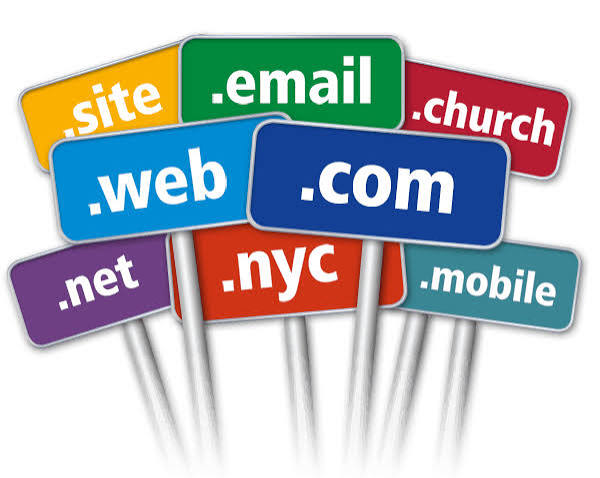
The domain extension is the part that appears after the final dot, such as .com or .net. It is also known as a top-level domain (TLD).
Common domain extensions include:
- .com: A widely recognized general-purpose extension suitable for many businesses.
- .net: A general extension used by different types of websites and organizations.
- .org: Commonly associated with organizations and nonprofit projects, although its use is not limited to them.
- .eg: A country-code extension associated with Egypt.
- .com.eg: A commercial domain option associated with Egypt, subject to the applicable registration requirements.
If your business targets customers in multiple countries, .com may be a practical choice when available. If your main audience is in Egypt, a suitable Egyptian domain extension may also support your local identity.
The best extension depends on your target market, availability, registration rules, and long-term branding plans.
4. Avoid Unnecessary Numbers and Hyphens
Numbers and hyphens can make a domain harder to communicate verbally.
For example, customers may not know whether to write a number as a digit or a word. Hyphens can also be forgotten when someone types the address.
Unless numbers or hyphens are an established part of your brand name, it is usually better to choose a simple version without them.
Your goal is to make the domain easy to share in a conversation, advertisement, or social media post.
5. Make Sure the Name Is Easy to Pronounce and Spell
A domain may look attractive on a screen but still be difficult to understand when spoken aloud.
Before choosing a name, test it with people who have not seen it before:
- Say the name aloud and ask them to write it down.
- Share the name verbally without spelling it.
- Check whether people confuse it with another word or brand.
- Make sure its spelling is clear in your target language.
This step is particularly important for businesses serving both Arabic-speaking and English-speaking customers.
If people repeatedly struggle to spell or pronounce your domain, consider a simpler alternative.
6. Check Domain Availability Before Finalizing Your Brand
Never build your entire branding around a domain name before checking whether it is available.
Search for the exact domain and possible variations through a reputable domain registrar.
Also check:
- Whether the same name is registered with another extension.
- Whether a similar domain is already used by a competitor.
- Whether the name is associated with a suspicious or harmful website.
- Whether the corresponding social media usernames are available.
- Whether the name conflicts with an existing trademark.
Remember that domain availability does not automatically mean you have the legal right to use the name as a trademark.
For additional guidance, review the ICANN guide to registering a domain name.
7. Choose a Name That Can Grow With Your Business
Your domain should support your future plans, not just your current products or services.
For example, a business that sells one type of product today may expand into several categories later. A very specific domain could become restrictive after that expansion.
Before making a final decision, ask yourself:
- Will this name still suit my business in three to five years?
- Can it represent new products or services?
- Will it work if I expand into other cities or countries?
- Does it still make sense if my business model changes?
A flexible brand name can save you from unnecessary rebranding and domain migration later.
8. Protect Your Brand and Avoid Trademark Conflicts
Before registering a domain, research whether another company already uses the same or a confusingly similar name.
A domain registration does not automatically grant trademark rights. If your chosen name conflicts with an existing protected brand, you could face legal disputes or be required to stop using it.
Consider the following steps:
- Search for existing businesses using the same name.
- Check relevant trademark databases in your target markets.
- Review similar names and spellings.
- Consider registering your own trademark when appropriate.
- Secure important domain variations when they are available and relevant to your business.
The World Intellectual Property Organization (WIPO) provides useful guidance on securing domain names and protecting business identity online.
9. Do Not Choose a Domain Based Only on SEO Keywords
Some business owners believe that including several target keywords in a domain will automatically improve their Google rankings.
This is not a reliable SEO strategy.
A domain should primarily support your brand and make sense to your audience. Adding unnecessary keywords can make it look unnatural and difficult to remember.
Instead, focus your SEO efforts on:
- Publishing useful and relevant website content.
- Creating well-structured pages.
- Improving website speed and mobile usability.
- Using relevant keywords naturally in page titles and content.
- Building a clear internal linking structure.
- Earning relevant and trustworthy backlinks.
You can learn more about professional SEO and indexing services to understand how a complete SEO strategy supports your website’s visibility.
10. Register Your Domain With a Trusted Provider
Choosing the right name is only part of the process. You should also register it through a reliable provider that gives you proper control over your domain.
Before completing your purchase, review the following:
- The initial registration price.
- The annual renewal cost.
- The domain transfer policy.
- DNS management features.
- Account security and recovery options.
- Available domain privacy protection.
- Customer support availability.
- Automatic renewal settings, if needed.
Most importantly, make sure the domain is registered under your own name or your company’s legal details, and that you retain access to the account.
If a developer or agency registers the domain on your behalf, confirm that you have full ownership information and administrative control.
What Is the Difference Between a Domain Name and Web Hosting?
Many beginners confuse domain registration with web hosting, but these are two different services.
| Item | What It Does |
|---|---|
| Domain Name | The address visitors use to access your website, such as example.com |
| Web Hosting | The server space where your website files, databases, and content are stored |
Think of your domain as your business address and hosting as the physical space where your website exists.
Both are essential for launching a functioning website. You can learn more about Media Serve’s Domain Hosting Service if you need help choosing and managing a domain for your business.
Common Mistakes to Avoid When Choosing a Domain
Before registering your domain, avoid these common mistakes:
- Choosing a name that is too long or difficult to remember.
- Using confusing spelling, unnecessary numbers, or hyphens.
- Selecting a name that is too similar to an existing brand.
- Choosing an extension that does not fit your target audience.
- Ignoring annual renewal fees and transfer conditions.
- Registering the domain under someone else’s account without proper ownership arrangements.
- Choosing a name that limits future business expansion.
- Assuming that domain registration automatically provides trademark protection.
- Depending on keywords in the domain instead of building a complete SEO strategy.
- Forgetting to secure the domain account with strong passwords and appropriate security measures.
Avoiding these mistakes can help protect your online identity and reduce the risk of future technical, financial, or legal problems.
Does a Domain Name Affect SEO and Google Rankings?
A domain name can support your brand identity and help users recognize your website, but it is not a shortcut to the top of Google’s search results.
Google’s search systems consider many aspects of a website, including content relevance, page quality, technical accessibility, user experience, and other signals.
A good domain can make your brand easier to remember and search for, but strong SEO requires a complete strategy.
For better search visibility, focus on:
- High-quality content that answers users’ questions.
- Clear page titles and headings.
- A logical website structure.
- Fast-loading pages and mobile-friendly design.
- Secure HTTPS connections.
- Relevant internal links.
- Useful external references and trustworthy backlinks.
Your domain should be the foundation of your digital identity, while your website content and overall performance build its long-term search presence.
When Should You Register Your Domain Name?
It is usually best to register your domain once you have selected your business name and checked its availability and legal suitability.
Waiting too long can create a problem if another person or company registers the name first.
Before purchasing, make sure you have:
- Confirmed the correct spelling.
- Selected the most suitable extension.
- Checked for trademark conflicts.
- Compared registration and renewal prices.
- Reviewed the provider’s terms and transfer policy.
- Confirmed that the domain will be registered under your control.
After registration, keep your account details secure and renew the domain before it expires.
Why Do You Need a Professional Website After Choosing Your Domain?
Registering a domain is the beginning of your online presence, not the final step.
Your business needs a professional website that reflects your brand, explains your services, builds customer confidence, and makes it easy for visitors to contact you or place an order.
A well-designed website should include:
- A clear presentation of your company and services.
- Responsive layouts for mobile phones, tablets, and computers.
- Fast page loading and a smooth browsing experience.
- Search-engine-friendly structure.
- Clear calls to action and contact information.
- Secure and reliable hosting.
Media Serve provides professional website design services along with website development, hosting, and SEO solutions to help businesses establish a stronger digital presence.
Frequently Asked Questions About Choosing a Domain Name
What Is the Best Domain Extension for a Business?
The .com extension is a widely recognized option for commercial websites. However, the best extension depends on your audience, business location, availability, and registration requirements. Businesses targeting Egypt may also consider suitable local extensions.
Should My Domain Name Match My Company Name?
It is often a good idea because it creates consistency between your brand and website. However, the domain does not have to match your legal company name exactly, provided the chosen name is suitable and does not conflict with another brand’s rights.
Is a Short Domain Name Better?
In many cases, yes. Short names are generally easier to remember, type, and share. However, clarity and brand relevance are more important than length alone.
Do Keywords in a Domain Name Improve Google Rankings?
A keyword in a domain name does not guarantee better rankings. A recognizable brand name and a well-optimized website are more valuable than filling the domain with search terms.
Can I Change My Domain Name After Launching My Website?
Yes, but changing a domain requires careful planning. You may need to configure 301 redirects, update internal links, review canonical URLs, update analytics and search tools, and monitor indexing after the migration.
Can I Register a Domain That Someone Else Already Owns?
You may be able to purchase it from its current owner if they are willing to sell. Before making any payment, verify ownership, agree on the transfer process, and use a secure transaction method.
Is Buying a Domain the Same as Buying Web Hosting?
No. A domain is your website’s address, while hosting provides the server resources that store and deliver your website files. Most websites need both services.
Should I Buy Multiple Domain Extensions?
It may be useful to register additional extensions if they are important to your brand, target markets, or customer protection strategy. However, choose them based on business needs and budget rather than purchasing every available extension.
Conclusion: Choose a Domain That Builds Your Brand for the Future
Choosing a domain name is an important step in building a professional online identity. The right name should be memorable, easy to spell, relevant to your brand, and flexible enough to support your business as it grows.
Before registering, check availability, review possible trademark conflicts, compare extensions, understand renewal costs, and make sure you retain full control of the domain.
Once you have secured the right domain, the next step is to build a professional website that turns your online identity into a valuable business asset.
Need help choosing a domain or building your business website?
Media Serve provides domain hosting, website design, web development, and SEO services to help businesses establish and grow their digital presence.
Contact Media Serve
- Phone: +20 111 354 1635
- WhatsApp: +20 100 750 1635
- Email: [email protected]
- Website: https://en.mediaserves.com/
Explore our services:
Read this article in Arabic:
كيف تختار اسم الدومين المناسب لموقعك؟ 10 نصائح لبناء علامة تجارية قوية على الإنترنت

One comment